I just made Homemade Pickles Dill that are absurdly crisp and tangy, and I promise you’ll keep scrolling to find out what makes them so punchy.
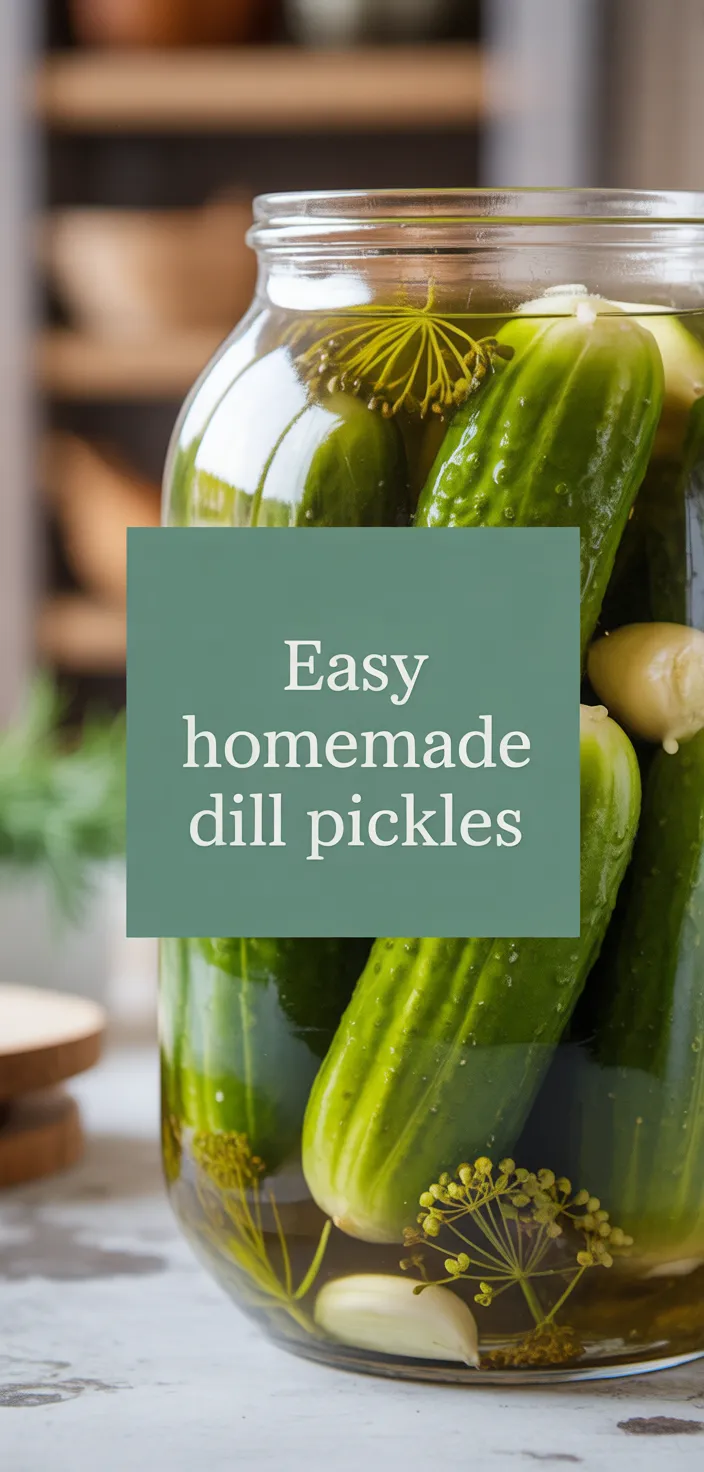
I’m obsessed with these Easy Pickle dill babies. I love biting into that crisp snap, the vinegary tang with fresh dill sprigs and a hit of garlic cloves.
They wake up boring sandwiches, make hot dogs sing, and disappear way too fast when I’m snacking. I don’t need fancy equipment or a food snob’s approval to crush a jar.
Straightforward, loud flavor that tastes like Homemade Pickles Dill. But the best part is the crunch that lasts.
You can stash a jar and forget it, then open it and be thrilled all over again. I will eat them every time.
Ingredients
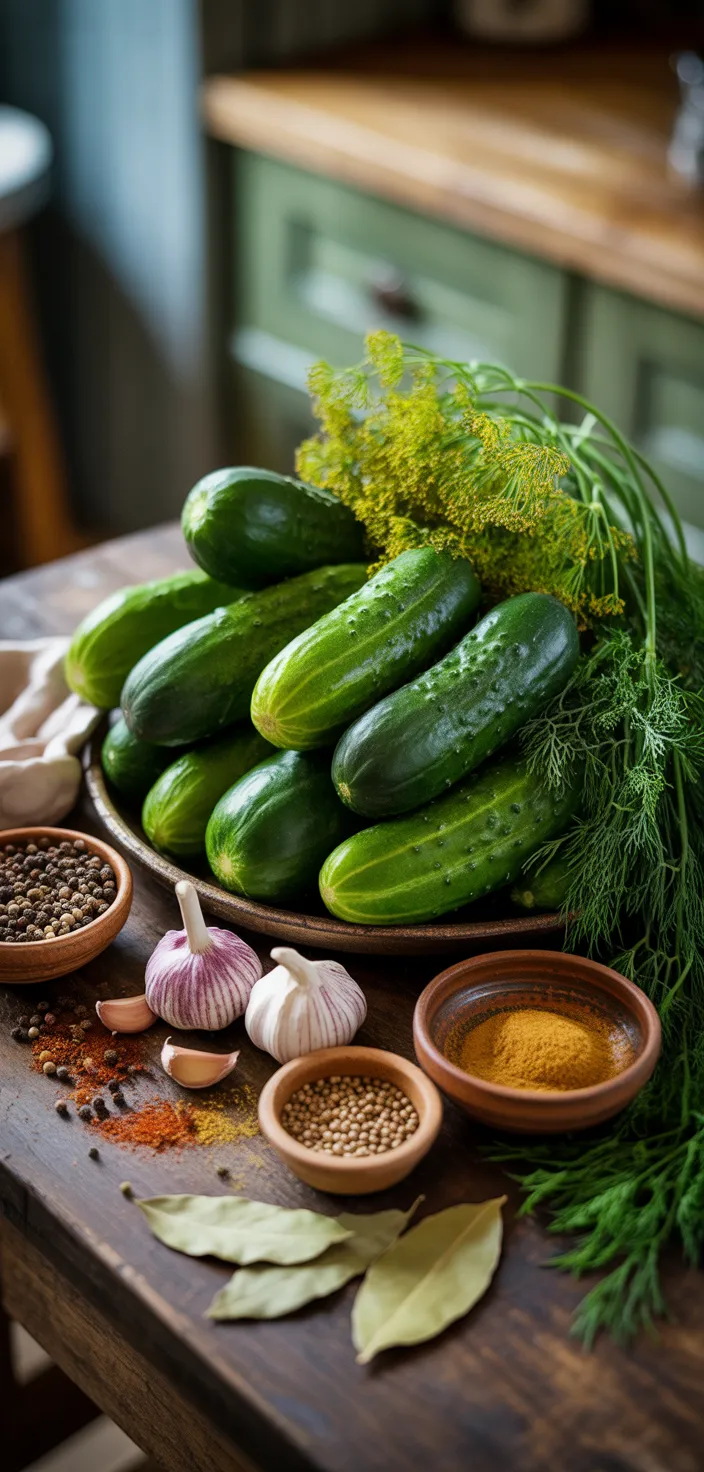
- Cucumbers: crunchy backbone, fresh bite that keeps you coming back.
- Fresh dill heads/sprigs: classic herbiness, fragrant and slightly tangy.
Basically pickle identity.
- Garlic cloves: punchy, savory boost; go heavier if you like it garlicky.
- White vinegar: bright acidity that makes the pickles tangy and shelf-stable.
- Water: tones down the vinegar so it’s drinkable and not just sharp.
- Pickling/kosher salt: essential for crispness and real pickling flavor, not metallic.
- Sugar: balances sharpness with subtle sweetness.
Plus it calms the tartness.
- Yellow mustard seeds: tiny pops of warm, slightly bitter spice.
- Coriander seeds: citrusy, nutty note that’s mellow and interesting.
- Black peppercorns: earthy heat and subtle complexity in each bite.
- Bay leaves: herbal depth and a low, leafy background note.
- Crushed red pepper flakes: optional heat; adds a cheeky, lingering spice.
Ingredient Quantities
- 4 pounds pickling cucumbers, scrubbed and ends trimmed
- 8 to 10 fresh dill heads or 8 to 10 fresh dill sprigs
- 8 garlic cloves, peeled (more if you like it garlicky)
- 4 cups distilled white vinegar (5 percent acidity)
- 4 cups water
- 3 tablespoons pickling salt or kosher salt (do not use iodized table salt)
- 2 tablespoons granulated sugar (optional, balances acidity)
- 1 tablespoon yellow mustard seeds
- 1 tablespoon coriander seeds
- 2 tablespoons whole black peppercorns
- 4 bay leaves
- 1/2 teaspoon crushed red pepper flakes (optional, for a little heat)
How to Make this
1. Wash jars, lids and bands in hot soapy water and sterilize jars by boiling them 10 minutes; keep jars hot until ready, set lids and bands in simmering water so they stay clean.
2. Trim off both ends of cucumbers and cut into spears or leave whole if small; pack 3 to 4 cucumbers per pint jar depending on size.
3. Into each jar add 1 dill head or sprig, 2 garlic cloves, 1 bay leaf, a pinch of red pepper flakes if using, and divide mustard seeds, coriander seeds and peppercorns evenly among the jars.
4. In a medium pot combine 4 cups white vinegar, 4 cups water, 3 tablespoons pickling or kosher salt and 2 tablespoons sugar if you want a touch of sweetness; bring the brine to a full boil so salt and sugar dissolve.
5. Carefully pour the hot brine over the packed cucumbers, leaving about 1/2 inch headspace at top of each jar; tap jars gently to remove air bubbles and add more brine if needed to maintain the headspace.
6. Wipe jar rims clean with a damp towel, place lids on and screw bands on fingertip tight so they are snug but not over tightened.
7. Process jars in a boiling water bath: place jars in a canner or large pot with racks, cover with at least 1 inch of water, bring to a boil and process pint jars 10 minutes (add 1 minute per 1,000 feet elevation above sea level).
8. Remove jars from water and let cool on a towel undisturbed 12 to 24 hours; check seals by pressing center of lids, they should not flex. Any unsealed jars store in the fridge and use first.
9. Label and store sealed jars in a cool dark pantry; wait at least 2 weeks for best flavor though they will be tasty sooner, and properly sealed pickles will keep up to a year.
Equipment Needed
1. Canning jars with lids and bands, sterilized and ready
2. Large canner or big pot with a rack for boiling the jars
3. Medium saucepan to make the brine
4. Jar lifter or long tongs for moving hot jars safely
5. Wide-mouth funnel to pour brine without spilling
6. Long-handled ladle for scooping and filling jars
7. Cutting board and a sharp chef knife for trimming cucumbers
8. Measuring cups and spoons for vinegar, water, salt and sugar
9. Clean kitchen towel to cool jars on and to wipe rims clean
10. Small spoon or chopstick to pop air bubbles and to evenly distribute spices
FAQ
Easy Homemade Dill Pickles Recipe Substitutions and Variations
- For the distilled white vinegar: use equal parts apple cider vinegar or rice vinegar if thats what you got, just make sure it’s 5 percent acidity or the pickles wont be safe.
- For fresh dill heads or sprigs: you can use 1 to 2 tablespoons dried dill weed or 1 tablespoon dill seed for a stronger, slightly different flavor.
- For pickling salt or kosher salt: use non-iodized sea salt (same weight as pickling salt) but do not use table salt with iodine, it can make the brine cloudy and taste weird.
- For garlic cloves: substitute 1 teaspoon garlic powder per clove, or use a few smashed shallots for a milder, sweeter note.
Pro Tips
1) Use the crunch test: pick the firmest cucumbers you can find and soak them in ice water for 30 minutes before packing. It really helps them stay crisp, otherwise they sometimes get soft after canning.
2) Toast the mustard and coriander seeds in a dry pan for 20 to 30 seconds until they smell nutty, but don’t burn them. Toasting wakes up the flavor so your pickles arent bland.
3) Keep the brine fully boiling when you pour it in and leave the 1/2 inch headspace exactly. If you overfill or underfill jars you risk poor seals or cloudy brine, and tapping jars to release trapped air really matters.
4) Label jars with the date and stash them in a cool dark spot, but plan to wait at least 2 weeks before opening for best flavor. If any lid didnt seal, pop that jar in the fridge and eat it first, dont try to reprocess it and hope for the best.
Easy Homemade Dill Pickles Recipe
I just made Homemade Pickles Dill that are absurdly crisp and tangy, and I promise you’ll keep scrolling to find out what makes them so punchy.
16
servings
27
kcal
Equipment: 1. Canning jars with lids and bands, sterilized and ready
2. Large canner or big pot with a rack for boiling the jars
3. Medium saucepan to make the brine
4. Jar lifter or long tongs for moving hot jars safely
5. Wide-mouth funnel to pour brine without spilling
6. Long-handled ladle for scooping and filling jars
7. Cutting board and a sharp chef knife for trimming cucumbers
8. Measuring cups and spoons for vinegar, water, salt and sugar
9. Clean kitchen towel to cool jars on and to wipe rims clean
10. Small spoon or chopstick to pop air bubbles and to evenly distribute spices
Ingredients
-
4 pounds pickling cucumbers, scrubbed and ends trimmed
-
8 to 10 fresh dill heads or 8 to 10 fresh dill sprigs
-
8 garlic cloves, peeled (more if you like it garlicky)
-
4 cups distilled white vinegar (5 percent acidity)
-
4 cups water
-
3 tablespoons pickling salt or kosher salt (do not use iodized table salt)
-
2 tablespoons granulated sugar (optional, balances acidity)
-
1 tablespoon yellow mustard seeds
-
1 tablespoon coriander seeds
-
2 tablespoons whole black peppercorns
-
4 bay leaves
-
1/2 teaspoon crushed red pepper flakes (optional, for a little heat)
Directions
- Wash jars, lids and bands in hot soapy water and sterilize jars by boiling them 10 minutes; keep jars hot until ready, set lids and bands in simmering water so they stay clean.
- Trim off both ends of cucumbers and cut into spears or leave whole if small; pack 3 to 4 cucumbers per pint jar depending on size.
- Into each jar add 1 dill head or sprig, 2 garlic cloves, 1 bay leaf, a pinch of red pepper flakes if using, and divide mustard seeds, coriander seeds and peppercorns evenly among the jars.
- In a medium pot combine 4 cups white vinegar, 4 cups water, 3 tablespoons pickling or kosher salt and 2 tablespoons sugar if you want a touch of sweetness; bring the brine to a full boil so salt and sugar dissolve.
- Carefully pour the hot brine over the packed cucumbers, leaving about 1/2 inch headspace at top of each jar; tap jars gently to remove air bubbles and add more brine if needed to maintain the headspace.
- Wipe jar rims clean with a damp towel, place lids on and screw bands on fingertip tight so they are snug but not over tightened.
- Process jars in a boiling water bath: place jars in a canner or large pot with racks, cover with at least 1 inch of water, bring to a boil and process pint jars 10 minutes (add 1 minute per 1,000 feet elevation above sea level).
- Remove jars from water and let cool on a towel undisturbed 12 to 24 hours; check seals by pressing center of lids, they should not flex. Any unsealed jars store in the fridge and use first.
- Label and store sealed jars in a cool dark pantry; wait at least 2 weeks for best flavor though they will be tasty sooner, and properly sealed pickles will keep up to a year.
Notes
- Below you’ll find my best estimate of this recipe’s nutrition facts. Treat the numbers as a guide rather than a rule—great food should nourish both body and spirit. Figures are approximate, and the website owner assumes no liability for any inaccuracies in this recipe.
Nutrition Facts
- Serving Size: 113g
- Total number of serves: 16
- Calories: 27kcal
- Fat: 0.54g
- Saturated Fat: 0.06g
- Trans Fat: 0g
- Polyunsaturated: 0.25g
- Monounsaturated: 0.19g
- Cholesterol: 0mg
- Sodium: 1325mg
- Potassium: 173mg
- Carbohydrates: 6.14g
- Fiber: 0.75g
- Sugar: 2g
- Protein: 1g
- Vitamin A: 240IU
- Vitamin C: 4.9mg
- Calcium: 21mg
- Iron: 0.44mg