I share my Easy Crumpet Recipe and the clever tricks that reveal how those iconic crumpet holes form.
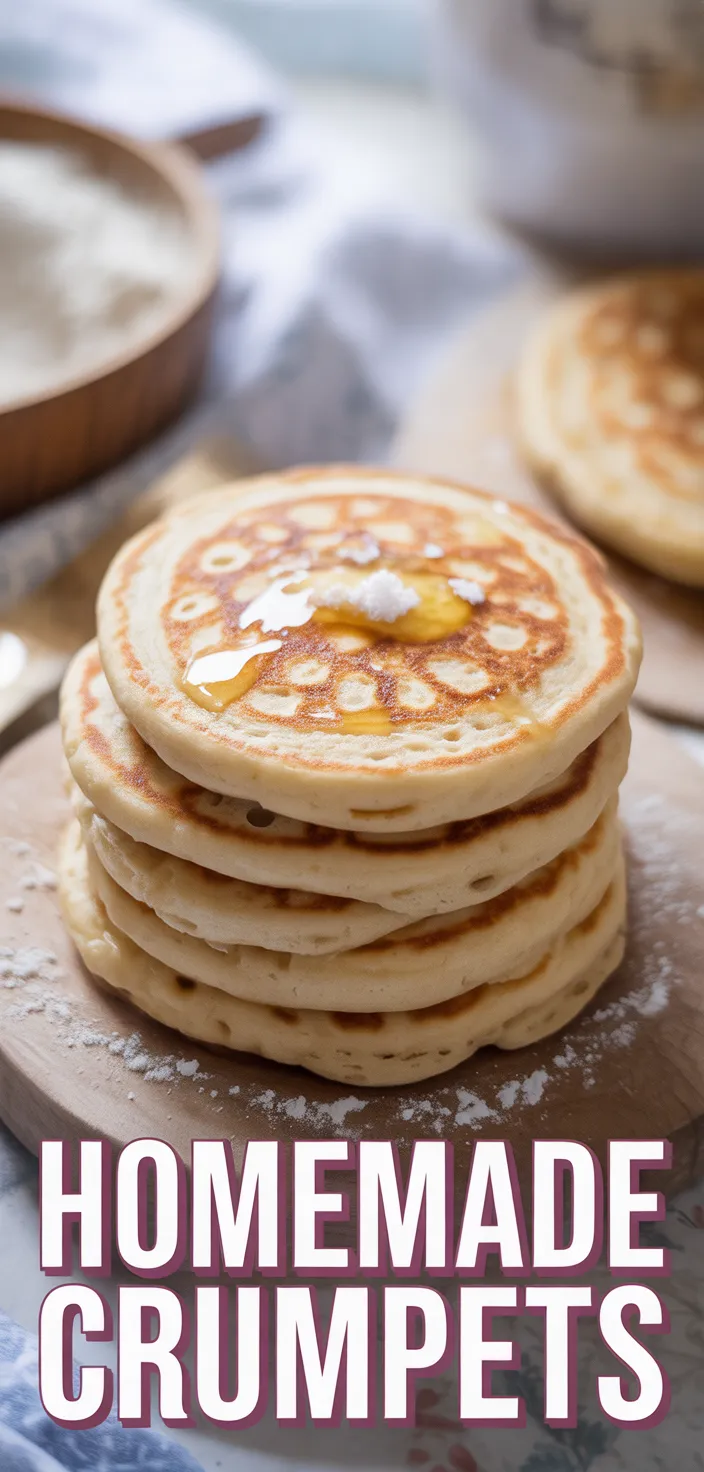
I’ve been making Homemade Crumpets for a while and this Crumpet Recipe still surprises me. If you’ve ever wondered how those perfect holes form and why they soak up everything so well, you’ll want to try this.
It starts with plain all purpose flour and instant dried yeast, simple pantry stuff, but the texture that comes out is weirdly magical. I messed up the first few times, burned a couple, and thought they were too doughy, but then it clicked and now I can’t stop testing new pans and rings, for real.
You might hate me for making you try them.
Ingredients
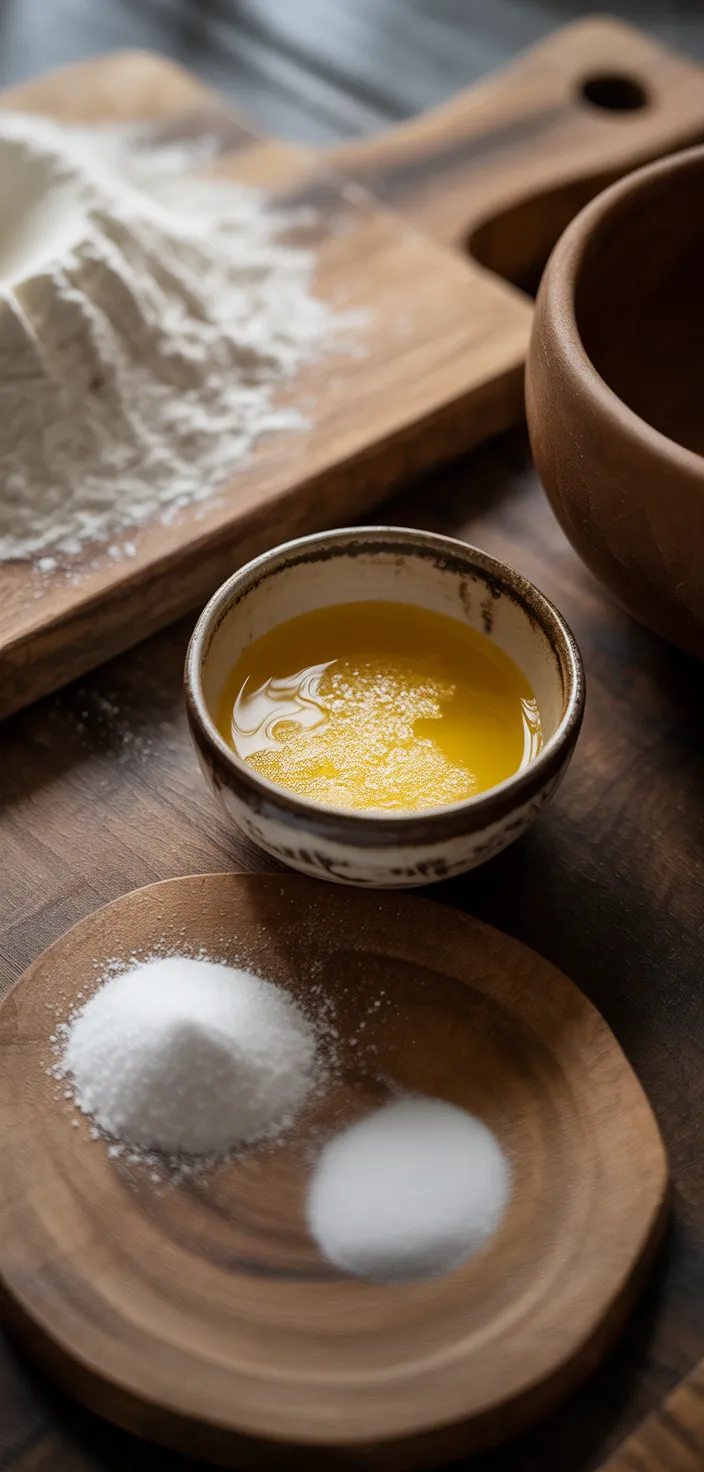
- Plain flour gives structure and carbs, low fibre if not wholegrain, makes crumpets chewy
- Instant yeast ferments sugars, adds air and flavour, small protein boost, mildly tangy
- Milk adds fat protein and calcium, makes batter richer and slightly sweet
- Butter gives richness, adds fat and flavour, helps browning and tender crumb
- Sugar feeds the yeast and adds gentle sweetness, not overly sugary
- Bicarbonate of soda reacts with acid for extra bubbles, lightens texture, use sparingly
Ingredient Quantities
- 300 g plain all purpose flour (about 2 1/2 cups)
- 7 g instant dried yeast (1 packet or about 2 1/4 tsp)
- 1 tsp caster sugar or granulated sugar
- 1 tsp fine sea salt
- 1/2 tsp bicarbonate of soda (baking soda)
- 350 ml warm liquid (milk or a mix of milk and water)
- 30 g unsalted butter, melted, plus extra for cooking and serving
- 1-2 tbsp vegetable oil or neutral oil for greasing the pan and rings
How to Make this
1. In a large bowl whisk together 300 g plain flour, 7 g instant yeast, 1 tsp sugar and 1 tsp fine sea salt until evenly mixed.
2. Warm 350 ml of your chosen liquid (milk or a milk and water mix) to about body temperature, roughly 38 to 43 C, not hotter or you’ll kill the yeast. Stir in 30 g melted butter, then pour the warm liquid into the dry mix and whisk to a smooth batter. A few small lumps are fine, dont overwork it.
3. Cover the bowl with a tea towel or plastic wrap and leave in a warm spot for 45 to 60 minutes until the batter is bubbly and has relaxed and risen slightly.
4. When the batter is bubbly, dissolve 1/2 tsp bicarbonate of soda in 1 to 2 tbsp warm water or milk, then stir that into the batter briskly. This makes the batter froth up more and creates the crumpet holes. Let rest 5 to 10 minutes for the reaction to settle.
5. Heat a heavy-based frying pan or griddle over medium-low heat. Grease the pan lightly with 1 to 2 tbsp vegetable oil or a little butter. Also grease the inside of your crumpet rings or metal cutters.
6. Place the rings on the pan, pour batter into each ring to a depth of about
1.2 to
1.5 cm (about 1/2 inch). Do not overfill; you want a flat top so the holes show.
7. Cook uncovered on the lower heat until the tops are set and full of little holes, about 7 to 10 minutes. If the bottoms brown too fast lower the heat; slow gentle cooking is key.
8. Remove the rings carefully (use tongs or a cloth) then flip each crumpet and cook the underside briefly, 30 seconds to 1 minute, just to colour and set the base.
9. Transfer to a wire rack or warm oven, serve immediately split and toasted a little if you like, slathered with lots of butter so it melts into those lovely holes.
Equipment Needed
1. Large mixing bowl, big enough to whisk and let the batter rise
2. Whisk, a balloon whisk works best for a smooth batter
3. Kitchen scale for grams, or measuring cups and spoons if you dont have one
4. Small saucepan or microwave safe jug to warm the milk
5. Instant read thermometer, handy to hit about 38 to 43 C
6. Crumpet rings or round metal cutters, greased so the batter holds its shape (about 7–8 cm wide)
7. Heavy based frying pan or griddle, for slow even cooking on medium low
8. Tongs or a thick cloth to lift hot rings, plus a thin spatula to flip the crumpets
9. Wire cooling rack or a warm oven tray to keep finished crumpets crisp while you finish the batch
FAQ
Homemade Crumpets Recipe Substitutions and Variations
- Plain all purpose flour: swap for bread flour for a chewier, taller crumpet, use the same weight 300 g. Or try swapping up to half the flour with whole wheat for a nuttier taste, but expect a denser crumb.
- Instant dried yeast: use active dry yeast instead, but proof it in the warm liquid for about 5 to 10 minutes and use the same weight 7 g. Or, if you want sourdough flavor, replace the yeast with about 150 g active sourdough starter and give the batter a long, cool rise for more tang.
- Warm liquid (milk or mix): use plant milks like oat or soy at the same volume 350 ml, soy gives better structure and oat adds sweetness. You can also use buttermilk or make a quick buttermilk by adding 1 teaspoon cider vinegar to the 350 ml milk or plant milk, which reacts nicely with the baking soda.
- Bicarbonate of soda: no bicarbonate on hand? use baking powder at about 1 and a half teaspoons to replace 1/2 teaspoon bicarbonate. It’s milder so texture will change a bit, but the crumpets will still bubble up.
Pro Tips
– Get the liquid right and be patient. If it feels hotter than body temp on your wrist its too hot and will kill the yeast, so cool it down. Let the batter sit until its properly bubbly before you add the bicarb, a slow rise gives better flavor and bigger bubbles.
– Be gentle after you add the bicarbonate. Dissolve the baking soda in a little warm liquid and stir in once, briskly, then stop. Overmixing or knocking the batter about will deflate the gas you just created and you’ll lose those lovely holes.
– Control the heat and prep your rings. Use a heavy pan and cook low and slow, lower the heat if the bases colour too quickly. Grease both pan and ring well and warm the rings a bit on the pan before pouring so batter doesnt stick. When removing hot rings use tongs and a cloth, dont try to pry them off.
– Finish and revive properly. Flip only briefly to set the base, then split and toast for extra crispness so the butter sinks into the holes. Leftovers? Refresh in a toaster or under a hot grill for best texture, not the microwave alone.
Homemade Crumpets Recipe
I share my Easy Crumpet Recipe and the clever tricks that reveal how those iconic crumpet holes form.
8
servings
203
kcal
Equipment: 1. Large mixing bowl, big enough to whisk and let the batter rise
2. Whisk, a balloon whisk works best for a smooth batter
3. Kitchen scale for grams, or measuring cups and spoons if you dont have one
4. Small saucepan or microwave safe jug to warm the milk
5. Instant read thermometer, handy to hit about 38 to 43 C
6. Crumpet rings or round metal cutters, greased so the batter holds its shape (about 7–8 cm wide)
7. Heavy based frying pan or griddle, for slow even cooking on medium low
8. Tongs or a thick cloth to lift hot rings, plus a thin spatula to flip the crumpets
9. Wire cooling rack or a warm oven tray to keep finished crumpets crisp while you finish the batch
Ingredients
-
300 g plain all purpose flour (about 2 1/2 cups)
-
7 g instant dried yeast (1 packet or about 2 1/4 tsp)
-
1 tsp caster sugar or granulated sugar
-
1 tsp fine sea salt
-
1/2 tsp bicarbonate of soda (baking soda)
-
350 ml warm liquid (milk or a mix of milk and water)
-
30 g unsalted butter, melted, plus extra for cooking and serving
-
1-2 tbsp vegetable oil or neutral oil for greasing the pan and rings
Directions
- In a large bowl whisk together 300 g plain flour, 7 g instant yeast, 1 tsp sugar and 1 tsp fine sea salt until evenly mixed.
- Warm 350 ml of your chosen liquid (milk or a milk and water mix) to about body temperature, roughly 38 to 43 C, not hotter or you'll kill the yeast. Stir in 30 g melted butter, then pour the warm liquid into the dry mix and whisk to a smooth batter. A few small lumps are fine, dont overwork it.
- Cover the bowl with a tea towel or plastic wrap and leave in a warm spot for 45 to 60 minutes until the batter is bubbly and has relaxed and risen slightly.
- When the batter is bubbly, dissolve 1/2 tsp bicarbonate of soda in 1 to 2 tbsp warm water or milk, then stir that into the batter briskly. This makes the batter froth up more and creates the crumpet holes. Let rest 5 to 10 minutes for the reaction to settle.
- Heat a heavy-based frying pan or griddle over medium-low heat. Grease the pan lightly with 1 to 2 tbsp vegetable oil or a little butter. Also grease the inside of your crumpet rings or metal cutters.
- Place the rings on the pan, pour batter into each ring to a depth of about
- 2 to
- 5 cm (about 1/2 inch). Do not overfill; you want a flat top so the holes show.
- Cook uncovered on the lower heat until the tops are set and full of little holes, about 7 to 10 minutes. If the bottoms brown too fast lower the heat; slow gentle cooking is key.
- Remove the rings carefully (use tongs or a cloth) then flip each crumpet and cook the underside briefly, 30 seconds to 1 minute, just to colour and set the base.
- Transfer to a wire rack or warm oven, serve immediately split and toasted a little if you like, slathered with lots of butter so it melts into those lovely holes.
Notes
- Below you’ll find my best estimate of this recipe’s nutrition facts. Treat the numbers as a guide rather than a rule—great food should nourish both body and spirit. Figures are approximate, and the website owner assumes no liability for any inaccuracies in this recipe.
Nutrition Facts
- Serving Size: 86g
- Total number of serves: 8
- Calories: 203kcal
- Fat: 6.09g
- Saturated Fat: 2.91g
- Trans Fat: 0.04g
- Polyunsaturated: 0.48g
- Monounsaturated: 1.31g
- Cholesterol: 12.4mg
- Sodium: 381mg
- Potassium: 109mg
- Carbohydrates: 31.1g
- Fiber: 1.01g
- Sugar: 2.79g
- Protein: 5.57g
- Vitamin A: 46IU
- Vitamin C: 0mg
- Calcium: 61.3mg
- Iron: 0.5mg